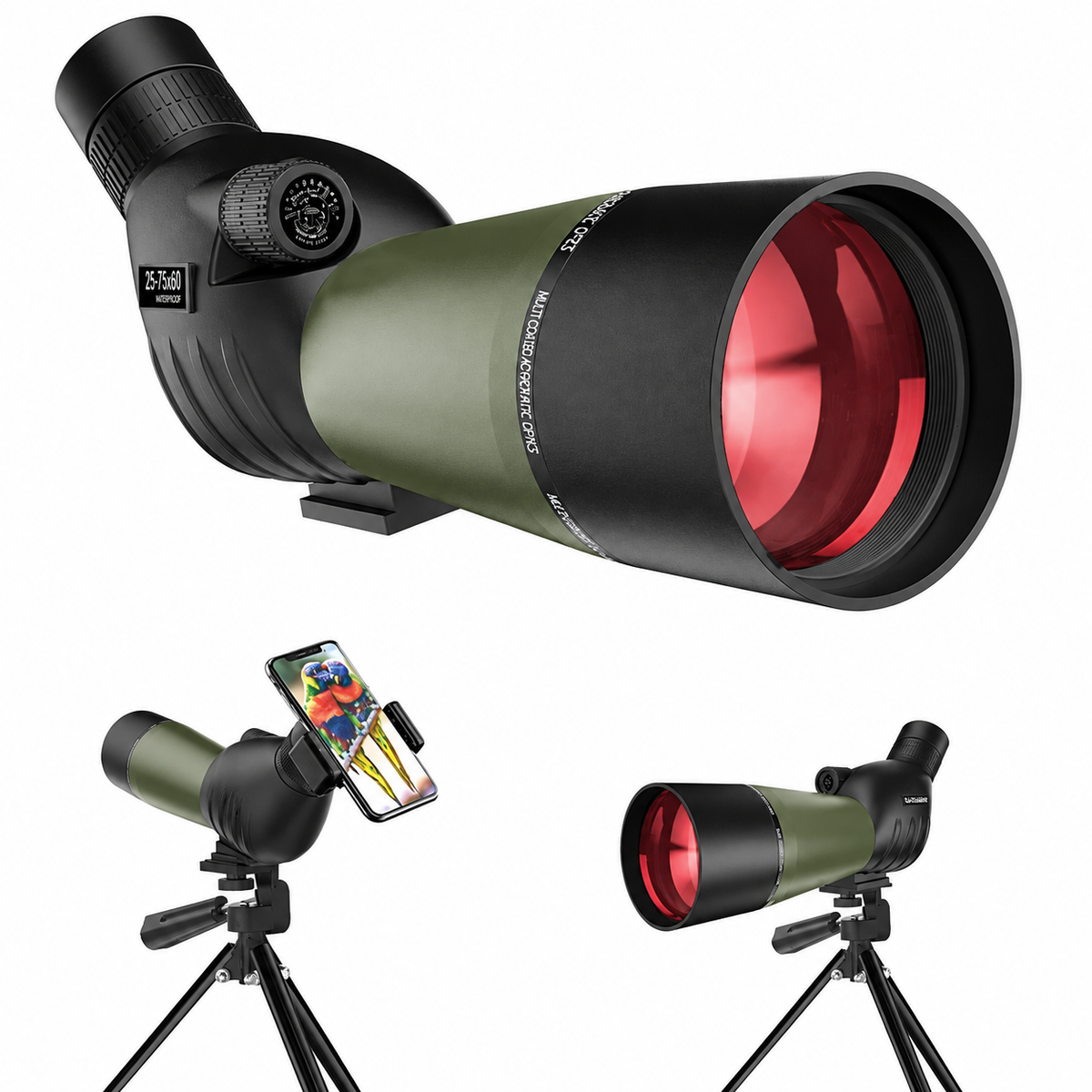
Bird watching offers countless opportunities for exploration and discovery, whether you're watching an unfamiliar bird take flight or observing the everyday behaviors of local species. The right equipment can help you see more, especially when birds are distant or difficult to approach. One useful tool is a spotting scope. This beginner's guide covers what spotting scopes do, what to consider when choosing one, and how to use one effectively in the field.
Table of Contents
- What is a Spotting Scope?
- Spotting Scope vs Binoculars: Which is Better for Bird Watching?
- Features to Consider When Choosing a Spotting Scope
- Tips for Effective Use of Spotting Scopes
- Conclusion
What is a Spotting Scope?
A spotting scope is a portable, high-powered optical instrument that allows you to observe distant wildlife with greater detail than standard binoculars. Designed to provide clear, magnified images, spotting scopes are particularly useful in bird watching, where the subject is often far away or skittish. Available in a range of magnifications and lens configurations, spotting scopes are particularly useful when you want a closer look at wildlife that is too distant to observe comfortably with binoculars alone.
Spotting Scope vs Binoculars: Which is Better for Bird Watching?

Spotting scopes and binoculars can complement each other rather than serving exactly the same purpose. Binoculars are convenient for scanning an area and following moving birds, while a spotting scope can provide greater magnification when you want to study a distant subject in more detail.
If you're deciding which is better suited to your outings, read our Spotting Scopes vs. Binoculars: Which Is Better for Bird Watching? guide for a more detailed comparison.
Features to Consider When Choosing a Spotting Scope
Selecting the right spotting scope involves considering various features that could enhance your bird watching experience:
- Magnification Power: Spotting scopes are available in different magnification ranges. More magnification can reveal additional detail at a distance, but it also makes stability increasingly important and generally narrows the field of view.
- Objective Lens Size: A larger lens gathers more light—beneficial for clearer images in dimmer settings.
- Eyepiece and Viewing Design: Spotting scopes may use fixed or zoom eyepieces and can have straight or angled viewing configurations. Consider which setup feels most comfortable for the type of observation you plan to do.
- Weather Protection: If you expect to use your scope in changing outdoor conditions, check the manufacturer's specifications for water resistance, fog resistance, and recommended operating conditions.
-
Portability and Setup: If you’re on the move, look for lightweight models and easy-to-use tripods.
Tips for Effective Use of Spotting Scopes
- Stability is Key: A stable tripod is especially helpful at higher magnifications. The Forejourney Spotting Scopes with Tripod provides the basic setup needed for supported viewing in the field.
- Practice Patience: Bird watching is a hobby of patience and stillness. Allow time for birds to come into view and use slow, deliberate movements to adjust your scope.
- Adapt to Lighting: Morning and late afternoon light is softer, providing optimal conditions for viewing birds without overwhelming glare. Adjust your scope’s angle to minimize direct sunlight interference.
- Protect Your Gear: After use, cover the lenses and keep your scope dry to prolong its lifespan. Spotting scopes are investments, and proper care ensures continued enjoyment.
Conclusion

Beginning your journey into bird watching with equipment suited to the way you like to observe can make time outdoors more rewarding. A spotting scope can provide a detailed look at distant birds and wildlife, while binoculars offer a portable option for scanning wider areas and following subjects on the move.
For those balancing convenience with capability, binoculars such as Forejourney's Binoculars High Magnification offer another option for wildlife observation.
Learn more about choosing the right gear for your bird watching needs at Forejourney and enhance your wildlife viewing adventure with tools designed for both novices and experienced naturalists.
By understanding the tools at your disposal and applying these practical tips, you can turn each outing into a remarkable opportunity for discovery and learning. Happy birding!