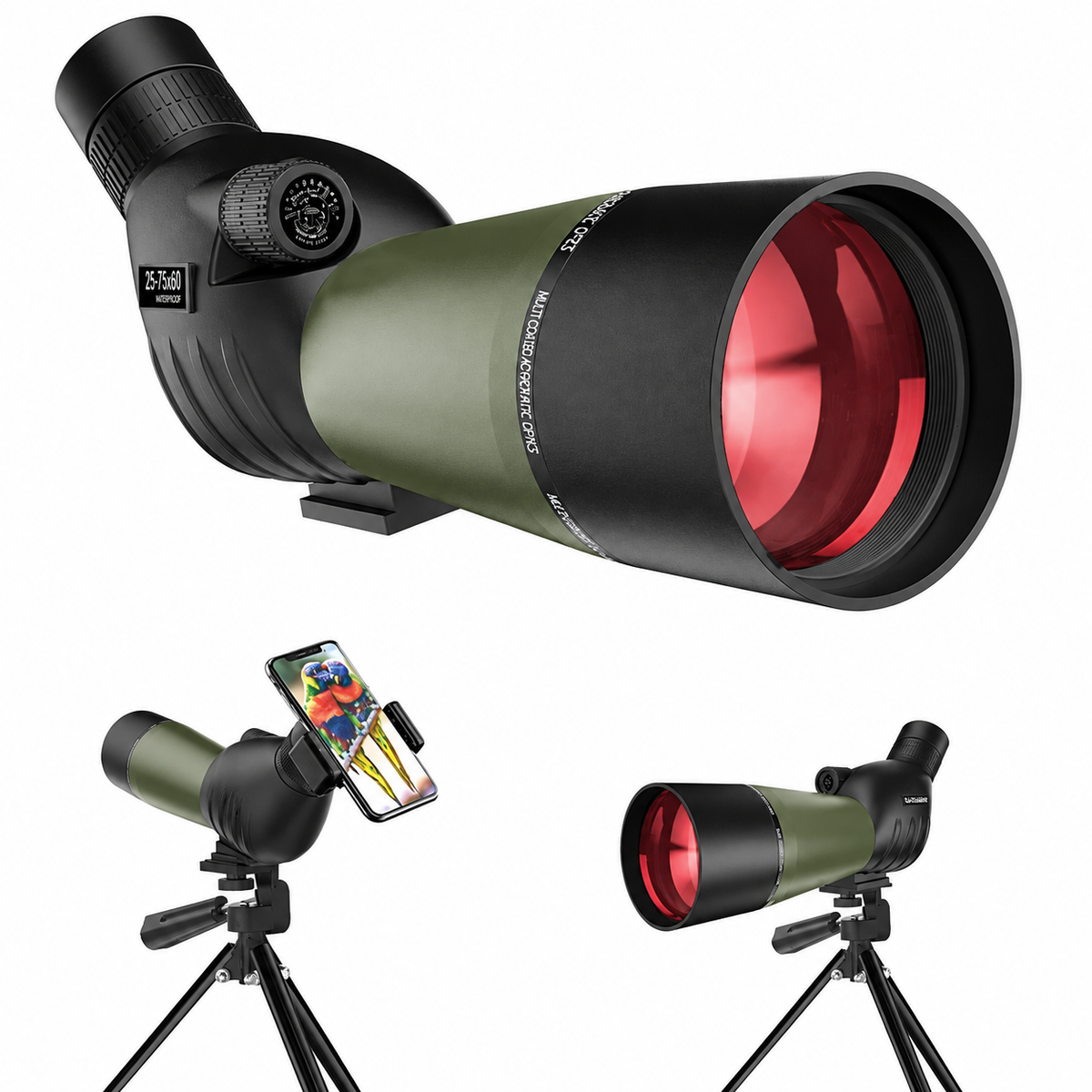
When it comes to bird watching, the right optical equipment can significantly enhance your wildlife viewing experience. Whether you're a novice enthusiast or a seasoned birdwatcher, choosing between a spotting scope and binoculars can be pivotal. Both have their advantages, but understanding their unique features and applications will help you make the most informed decision.
Table of Contents
- Understanding Spotting Scopes
- The Case for Binoculars
- Spotting Scope vs Binoculars: Comparing Key Attributes
- Magnification and Field of View
- Portability and Ease of Use
- Detail and Precision
- Practical Considerations for Bird Watchers
- Conclusion
Understanding Spotting Scopes

A spotting scope is a portable telescope specifically designed for detailed observation of distant objects and is particularly beneficial for bird watching. These instruments offer higher magnification than binoculars, providing sharper and more detailed images of birds perched high in trees or across open fields.
One of the critical features of a spotting scope is the adjustable magnification. This allows users to zoom in and scrutinize the fine details of avian plumage or behavior that might be missed with lower-powered optics. The Forejourney Spotting Scopes with Tripod come equipped with a sturdy tripod, enhancing stability and reducing image shake, which is often a challenge at higher magnifications.

The Case for Binoculars
Binoculars are a staple in wildlife viewing for their portability, ease of use, and affordability. They provide a wide field of view, making it easier to locate and track moving birds. Binoculars with high magnification, like those available at Forejourney, offer a good balance of magnification and a wide field of view, which is essential for observing fast-moving or distant birds.
For many bird watchers, the instant accessibility of binoculars—simply raising them to your eyes—makes them a practical choice for spontaneous birding trips or in challenging terrains.
Spotting Scope vs Binoculars: Comparing Key Attributes
Magnification and Field of View
Spotting scopes typically offer higher magnification, often ranging from 15x to 60x, providing detailed views of distant wildlife. However, high magnification also narrows the field of view, making it harder to spot and track fast-moving birds compared to binoculars.
Binoculars, on the other hand, generally offer magnifications between 7x and 10x. While this may seem lower, the wider field of view is advantageous for locating flying birds and observing broader landscapes.
Portability and Ease of Use
Binoculars are lightweight and compact, making them easy to carry and use on the go, whether hiking through a nature reserve or exploring a local park. In contrast, spotting scopes can be bulkier and often require additional gear, like a tripod, for stability and effective use.
Detail and Precision
For capturing intricate details, spotting scopes are superior due to their higher magnification capabilities. This makes them ideal for stationary bird watching, where observing specific features like feather pattern or beak size is essential.
Binoculars, while not offering the same level of detail, provide sufficient clarity for most casual observation scenarios.
Practical Considerations for Bird Watchers
- Environment: Consider where you'll be doing most of your bird watching. Wide-open spaces might benefit more from the high magnification of a spotting scope. In contrast, dense forests or areas with significant movement might be better suited to binoculars.
- Mobility: If you plan on long hikes or expeditions, the added weight of a spotting scope might be a factor unless you choose a more compact model.
- Budget: Evaluate the cost against your needs and frequency of use. If detail is your primary requirement, investing in a spotting scope might be worthwhile. For more general uses, high magnification binoculars could suffice.
Conclusion
Both spotting scopes and binoculars have distinct advantages catering to different bird watching experiences. Choosing the right one depends on your specific needs, the environments you'll be exploring, and how you prioritize detail versus mobility.
Enhance your bird watching with the right Forejourney optics: Spotting Scopes with Tripod for fantastic close-up views, or Binoculars High Magnification for versatile use across various terrains.
For more insights and gear for your outdoor explorations, visit Forejourney.